
Crypto's Great Reset
Nobody Is Coming to Save This Market But…

What Happened
The Fed left rates at 3.50% to 3.75% on Wednesday, and that was the boring part. The vote was 9-3, and all three dissenters wanted a hike. Kevin Warsh, running only his second meeting as chair, refused to call the hold a pause and has now stripped forward guidance out of the statement completely, so there’s no longer a paragraph telling you what the committee thinks it does next. When reporters pushed him on the split, he said he’d asked for a good family fight and got one.
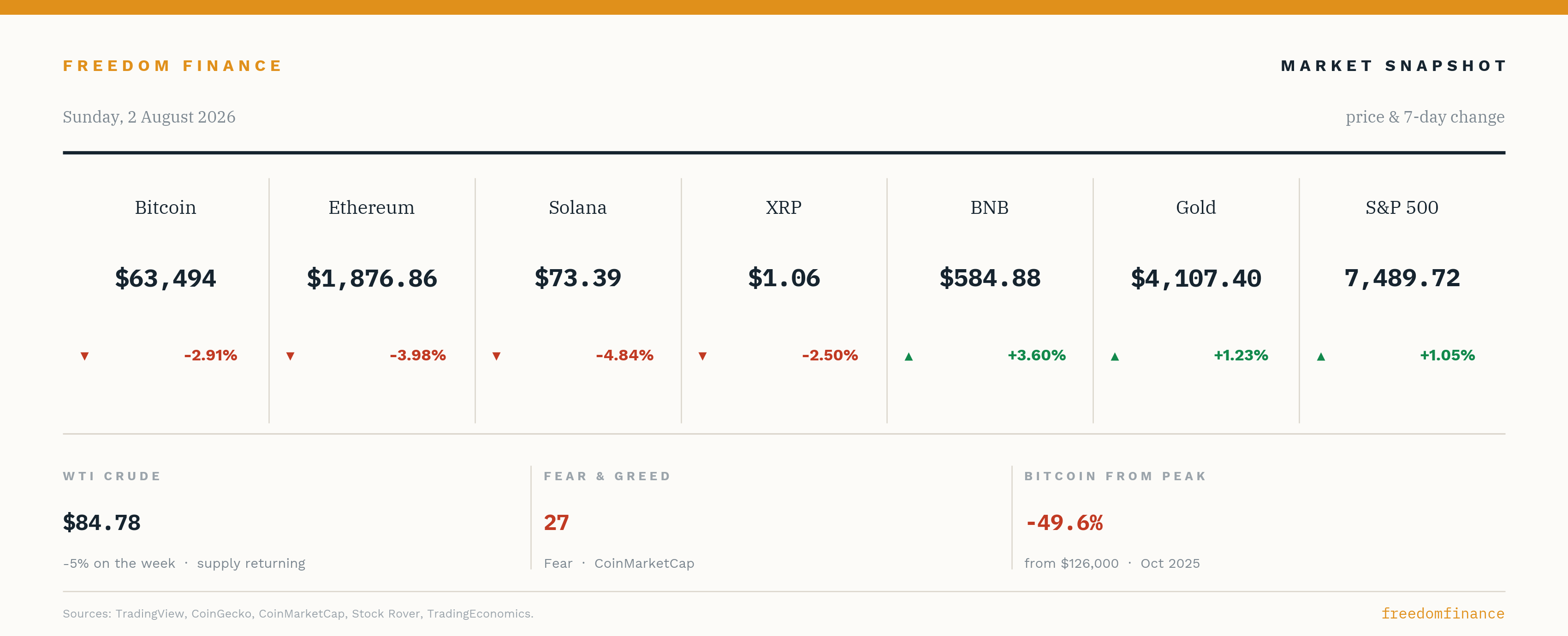
Markets came out of it pricing roughly a 65% chance of a September hike.
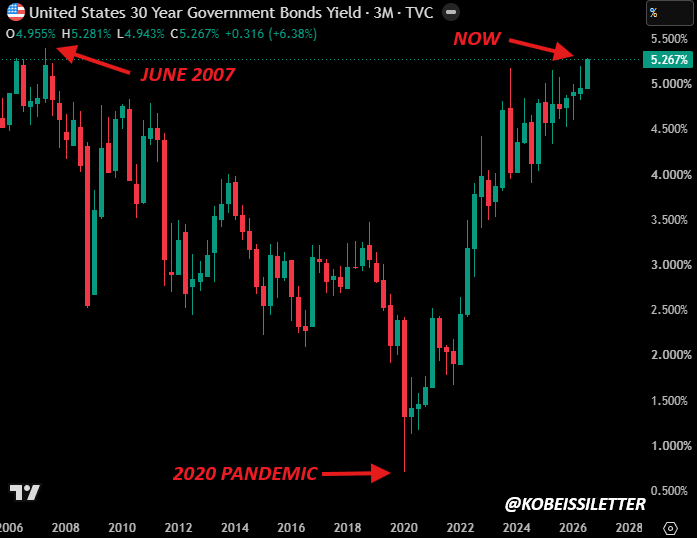
The 30-year Treasury yield closed the week at 5.267%, the highest it’s been since June 2007, and the 10-year pushed past 4.7%.
Bitcoin sat around $64,000 through the whole thing and barely moved, while the Dow dropped more than 840 points on the day.
Strategy reported Thursday, and the number everyone quoted was the $8.6 billion GAAP net loss, which is an accounting entry rather than cash out the door because bitcoin closed the quarter below the company’s average cost basis. The number that actually matters came later on the call, when CEO Phong Le walked through how much bitcoin the company might sell under its existing capital programs: up to $1.25 billion to fund the USD reserve, around $1.76 billion to cover annual dividend and interest obligations, and up to $2 billion to finance buybacks. That’s about $5 billion, and Saylor suggested it could eventually go higher. It’s an authorization ceiling rather than a plan to dump, and Strategy is still a net buyer of bitcoin year to date with 843,775 coins on the books. But Saylor also said the company will no longer put all of its new capital raises into bitcoin, which is a very different sentence than anything he’s said since 2020.
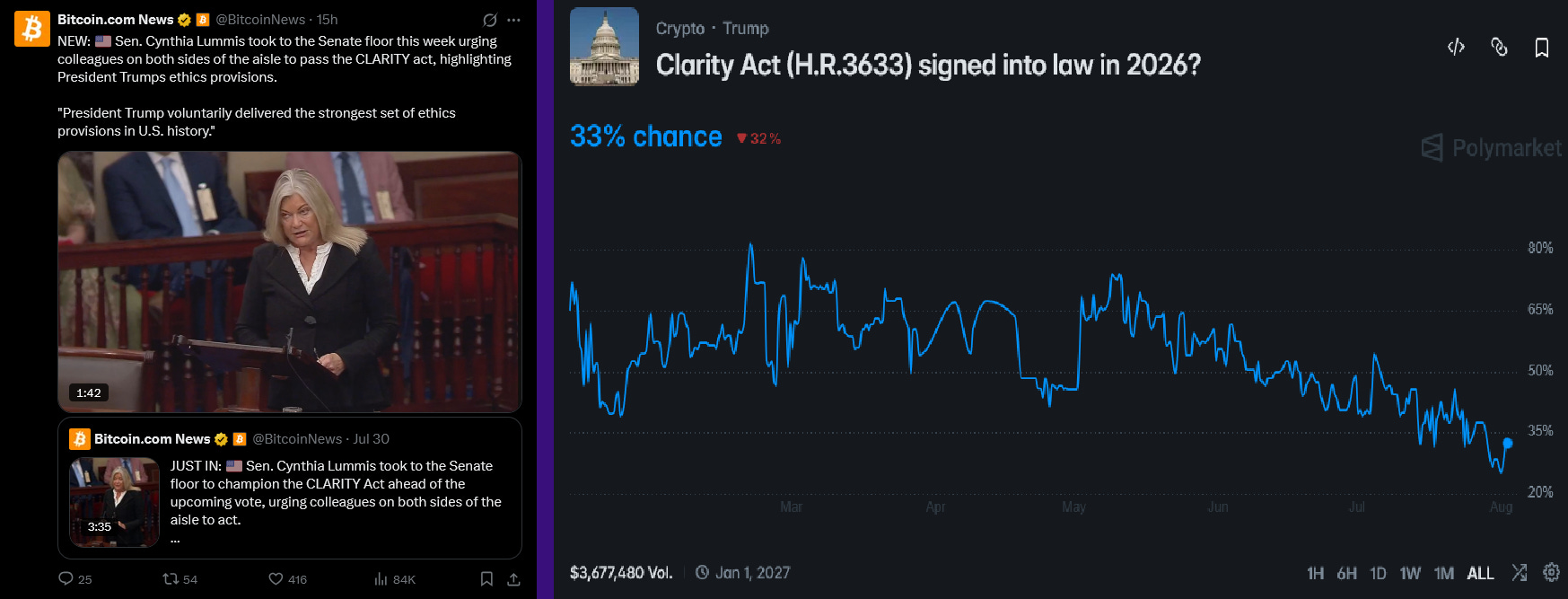
The CLARITY Act is stuck, and it’s stuck on ethics. Senate Majority Leader John Thune told reporters he doesn’t expect floor time before the recess that starts around August 7, with nominations and a Russia sanctions bill ahead of it in the queue. Senators Tillis and Gallego sent a new ethics package to the White House on Friday morning that reportedly gives state attorneys general a role, which is roughly what Democrats have been asking for, and the White House is reviewing it. Cynthia Lummis went to the Senate floor to argue the bill has already given away nearly everything that was asked of it over eleven months. Polymarket has 2026 passage down around 25% to 30%, from a peak above 80% in February.
ETF flows finished July positive by $172.4 million, which sounds like a recovery until you notice it’s the smallest positive month on record for the product. May and June together took out nearly $7 billion, so July stopped the bleeding without replacing anything. The last week of the month went negative at $61.53 million and Friday alone saw $265.4 million walk out the door, with BlackRock’s IBIT accounting for $122.66 million of it.
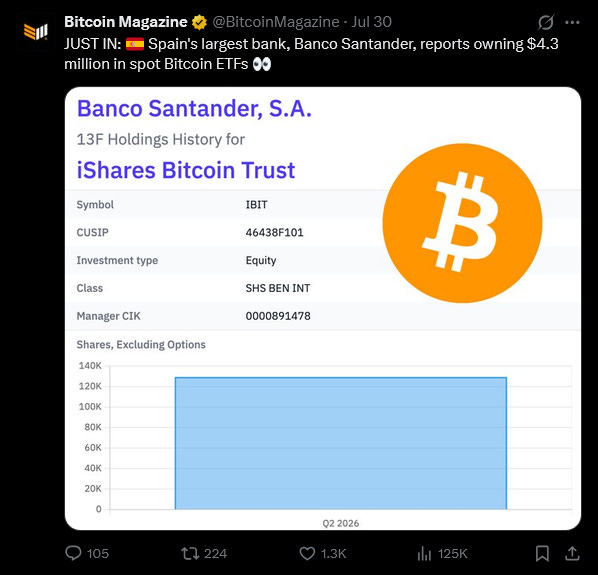
On the other side of the ledger, Banco Santander disclosed a $4.3 million IBIT position in its Q2 filing, which is small money from Spain’s largest bank and still the sort of thing that didn’t happen two years ago.
Coinbase missed for the third quarter running, with revenue down 18.5% year over year to $1.22 billion and a net loss of $359.5 million against an expected loss of about seventeen cents a share. Industry-wide spot volume fell 25% quarter over quarter, so this is mostly the market and not the company. Worth noting anyway: Coinbase took a record 10.3% trading share, subscriptions are now 48% of net revenue, and its prediction-markets business grew 106% in a quarter to clear $100 million.
Over at Robinhood, prediction markets brought in $156 million last quarter against roughly $100 million from crypto trading, which means the casino attached to the exchange is now bigger than the exchange.
Galaxy Research published the full accounting of the Coldcard seed-entropy flaw, and it’s worse than the first reports.
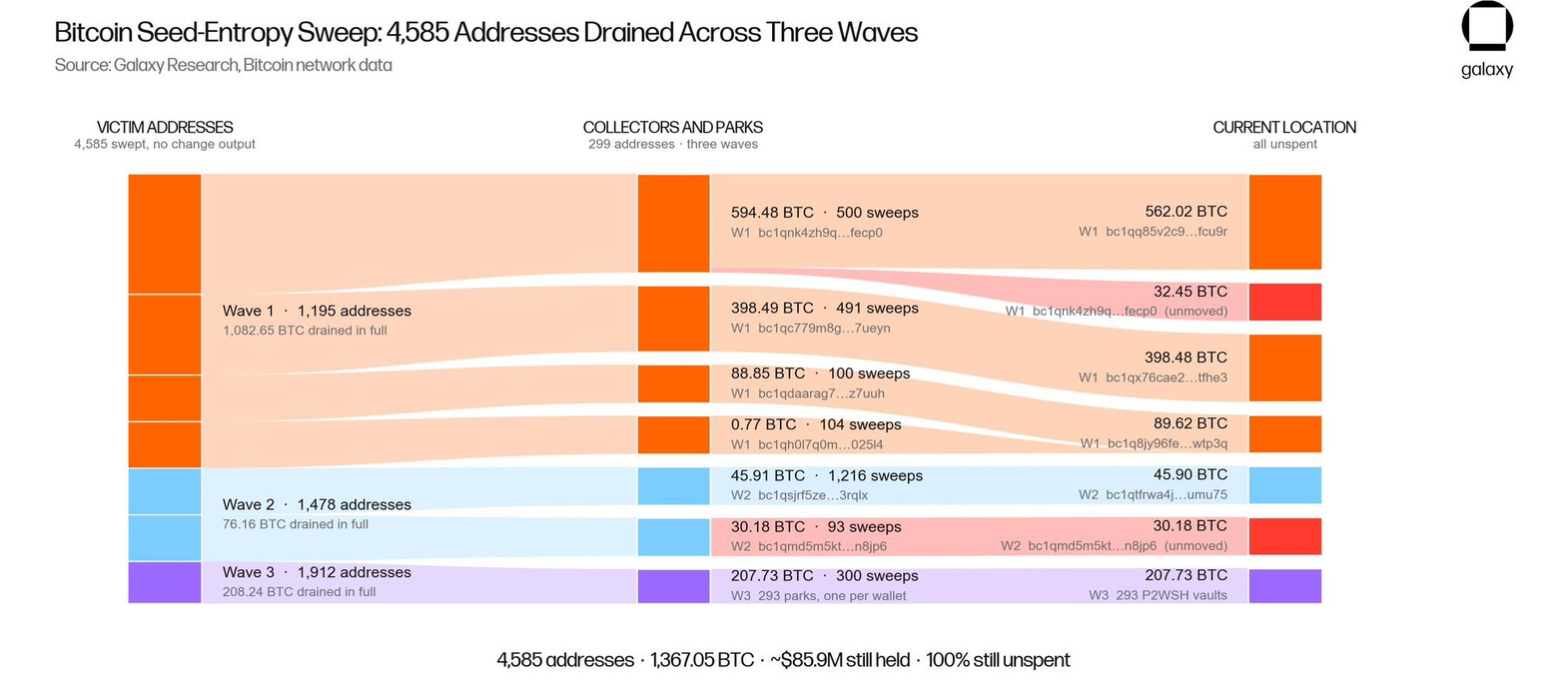
Across three waves, 4,585 addresses were swept for 1,367 BTC, around $85.9 million, and every coin is still sitting unspent in the attacker’s wallets. The vulnerable firmware dates back to March 2021, which means people were exposed for five years without knowing it. Elsewhere, Zcash activated its Ironwood upgrade on July 28, sealing off the old Orchard shielded pool after a four-year soundness bug and moving more than 500,000 ZEC into a new one without incident.
And US M2 money supply printed a new all-time high of $23.155 trillion, because of course it did.
Where Are We
Here’s the thing that should be bothering you more than any of the headlines above. For 157 days straight, US Treasuries have paid more than the crypto carry trade. Per Glassnode, that’s happened for a stretch this long exactly once before, from August 2022 into January 2023, and it ran 160 days and ended at the cycle low.
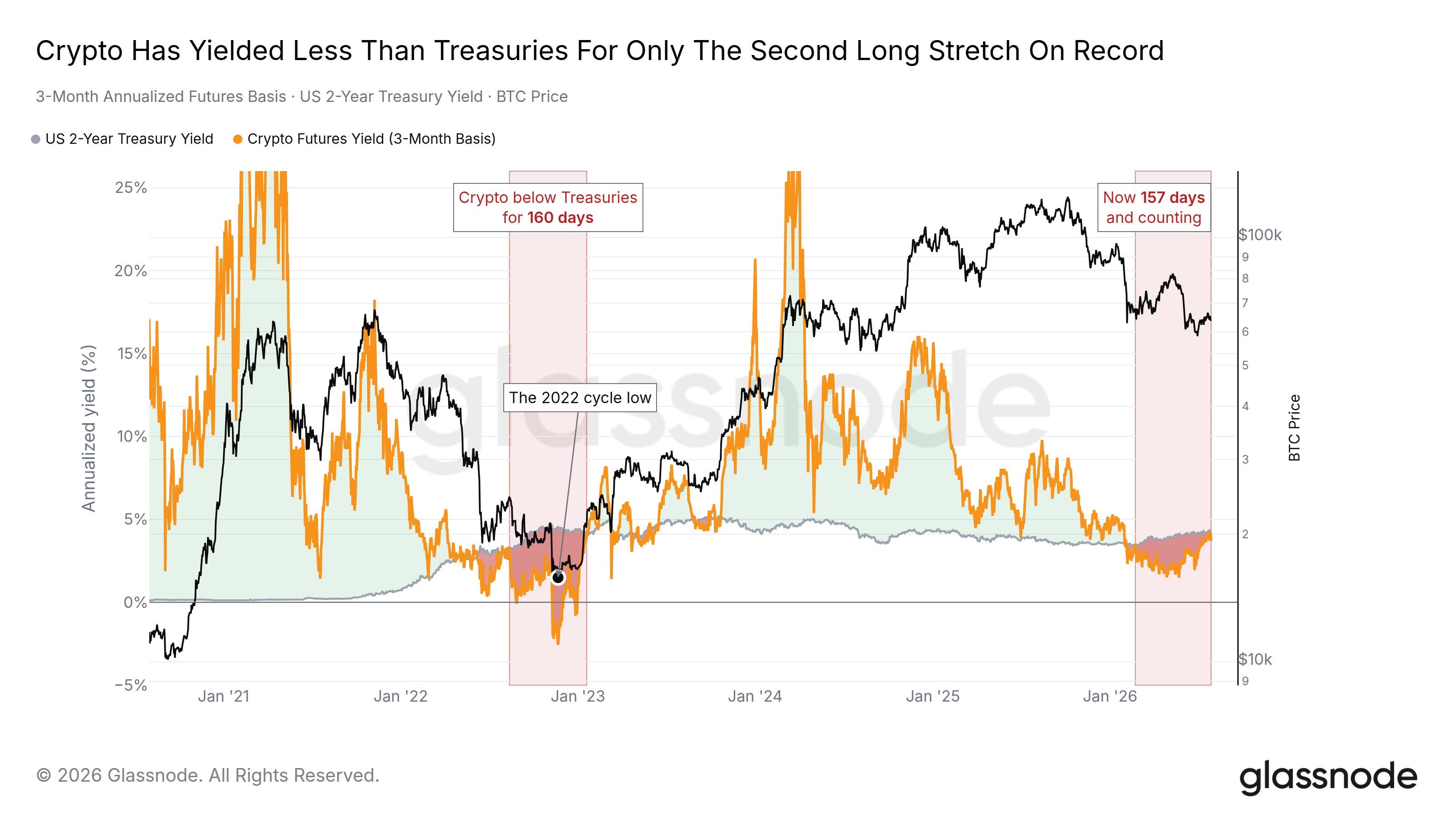
That single spread explains most of what this market feels like right now. The desks that supply leverage and depth and volume to crypto are businesses, and when a two-year Treasury pays better than the basis trade, they have no reason to show up. So they haven’t.
Spot volume has fallen to about 60,000 BTC a day, the lowest since 2019.
Exchange deposits and withdrawals have both thinned to the quietest combined pace in three years, which isn’t accumulation and isn’t distribution, it’s just nobody doing anything.
Fifty-four percent of ETF trading sessions this year have been net negative.
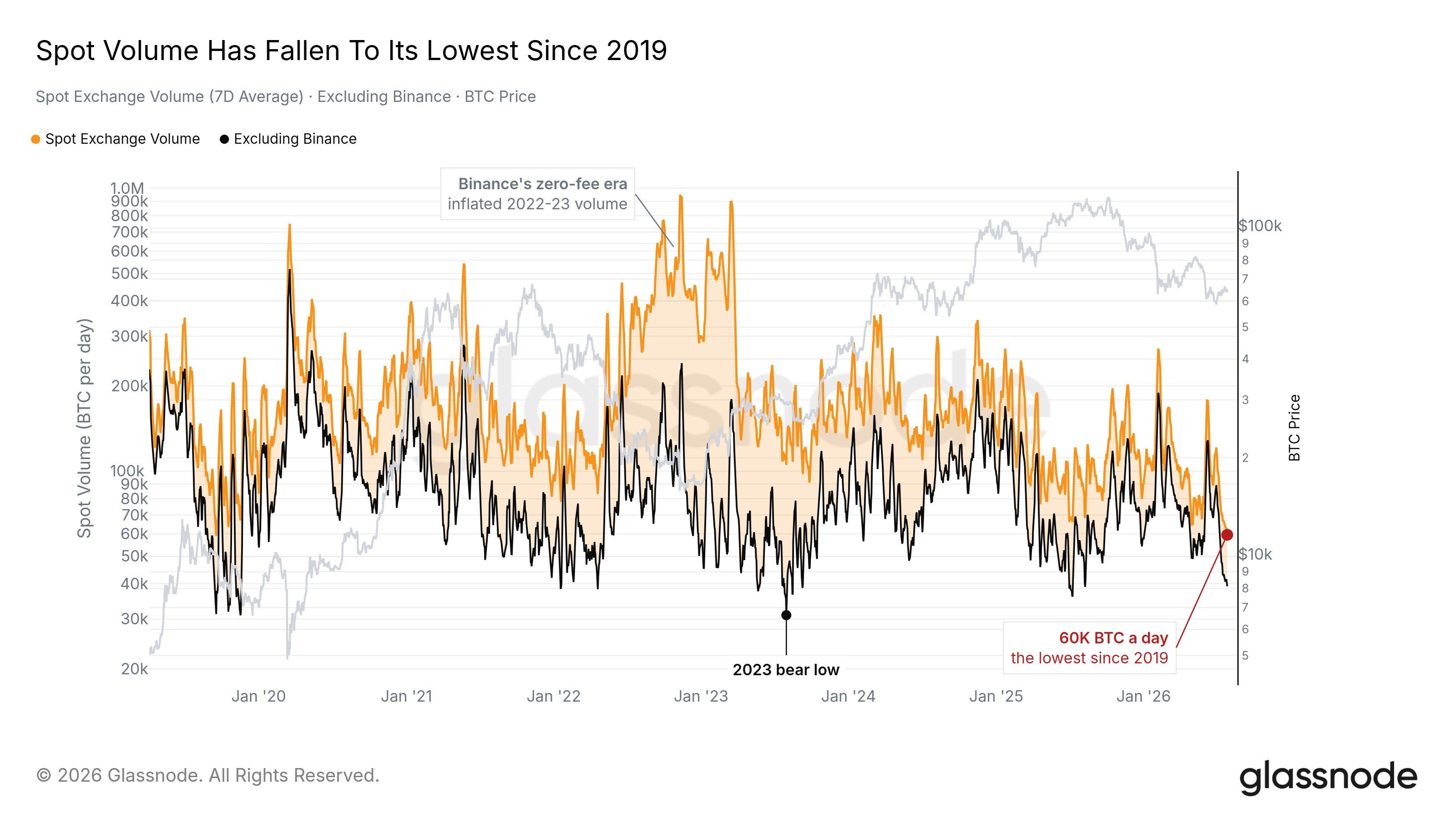
The money didn’t leave the building, it’s parked in something that pays it to sit still.
That’s the honest diagnosis, and it’s why we think the “crypto is broken” take is lazy. Nothing is broken. Cash got expensive, and crypto is a duration asset competing against it.
Now the part we actually want to argue. This week gave us four separate pieces of bad news of a kind that would have taken 8% off bitcoin in any other year.
CLARITY odds fell toward 25%.
The largest corporate holder on earth publicly authorized selling up to $5 billion.
The largest US exchange missed earnings for the third straight quarter.
And $85.9 million walked out of hardware wallets that people had trusted for five years.
Bitcoin ended the week roughly where it started. That’s not nothing. Markets that have stopped flinching at bad news are usually markets where everyone who was going to panic already did, and it’s one of the two or three most reliable signs that a bottoming process is underway rather than a bounce.
The other sign is leverage getting flushed, and that’s already happened. Strategy trading at 0.79 mNAV means the market values the company at a 21% discount to the bitcoin it holds, which is the market saying it does not believe in the flywheel anymore. Open interest has collapsed, funding has been pinned below neutral all month, and the entire implied volatility curve is compressed near the bottom of its range with six-month tenors almost never cheaper. The speculative excess is gone. It got taken out and shot somewhere around the end of Q2.
So we think the reset is real, and we think it’s structural rather than cyclical. The next leg of this thing doesn’t look like 2021. It looks like revenue. It looks like protocols with actual cash flows getting valued on multiples the way Hyperliquid already is, like tokenized stocks and real-world assets moving on-chain, like Robinhood building its own layer 2 and Morgan Stanley shipping ETH and SOL products. Uniswap is a global brand name with a couple of billion dollars of circulating value, and you cannot find that in the equity market. Those are the things that get repriced when the money comes back, and a lot of that repricing has quietly started while everyone’s been staring at bitcoin.
Now the honest half, because we’re not going to sell you a bottom we can’t prove.
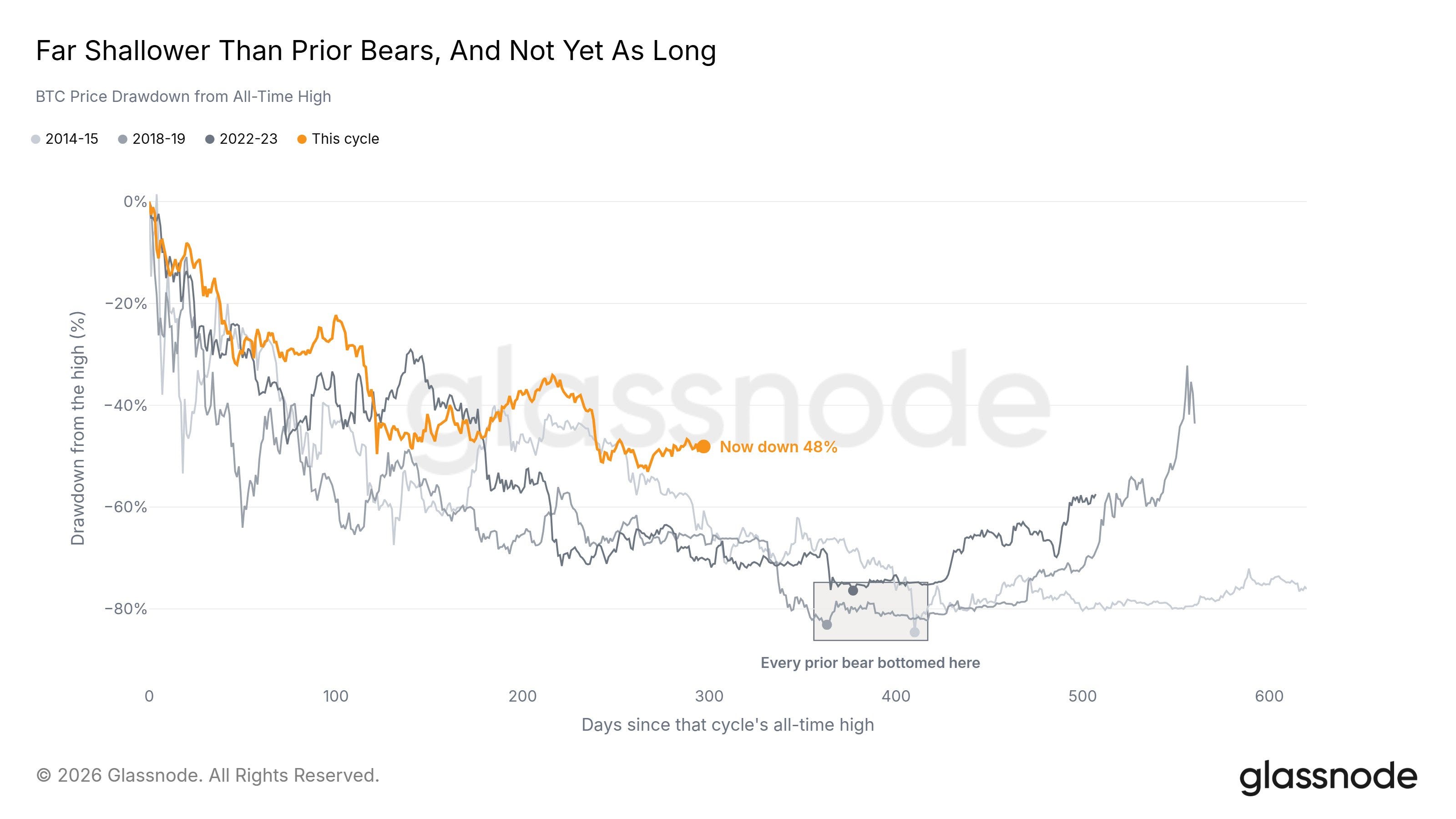
Shallow cuts both ways. This bear is 49% deep, which per Glassnode makes it the mildest on record, and every previous one bottomed far below that. By the clock it’s also unfinished, since prior bears ran about a third longer before finding their low. You can read “shallowest ever” as strength, and we lean that way. You can also read it as a drawdown that hasn’t done its work. Both readings are honest, and anyone telling you the second one is impossible is selling something.
The structure agrees with the caution.
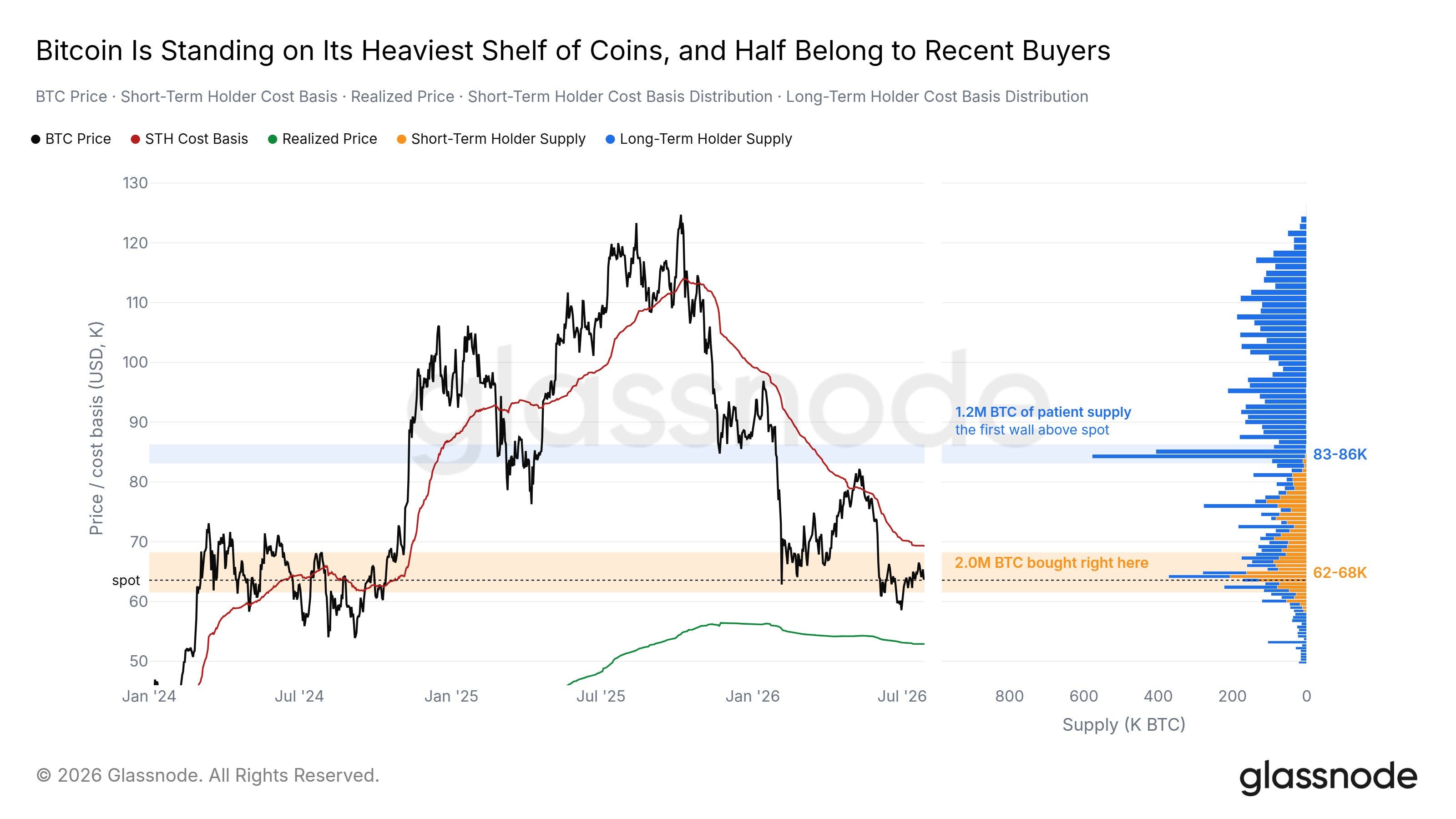
There are roughly 2 million BTC sitting in the $62,000 to $68,000 band, the single heaviest cost-basis shelf on the chart, and about half of that belongs to short-term holders who bought into this year’s decline and are underwater. Underwater short-term holders are the first supply to move on a bounce. Above them, the short-term holder cost basis at $69,000 is the line that decides the next leg, and the next real wall after that is 1.2 million coins between $83,000 and $86,000. Bitcoin is standing on the thickest floor it has and staring at a ceiling built out of people who want their money back.
On CLARITY, we’ll say the thing nobody in this industry wants to say out loud. The bill is being blocked over the president’s crypto business, and both sides of that fight are correct. The conflicts are real, and everything Trump did was also entirely legal, because there is no law. The bill people are refusing to pass is the bill that would make it illegal. That’s genuinely funny in a way that costs builders real money. It’s also a reminder that we’ve spent two years constructing a bull case that depends on a Senate cloture vote, and if bitcoin needs permission from a committee to work, then somebody sold us something other than what was advertised. The consolation is that it’s rolling anyway. Santander files a 13F showing IBIT. Morgan Stanley builds product. Robinhood runs a chain. None of that asked Congress first.
And on Coldcard, the timing deserves a raised eyebrow. Eighty-six million dollars leaves self-custody in the same quarter the ETF industry’s pitch is “let us hold it for you,” and the coins haven’t moved, which is not how thieves usually behave. We’re not alleging anything. We’re saying the incentive gradient is visible from space, and the correct response isn’t to run to a custodian. It’s the barbell: proper self-custody on one end, regulated institutional custody on the other, and nothing in the soft middle where every disaster in this industry has ever happened.
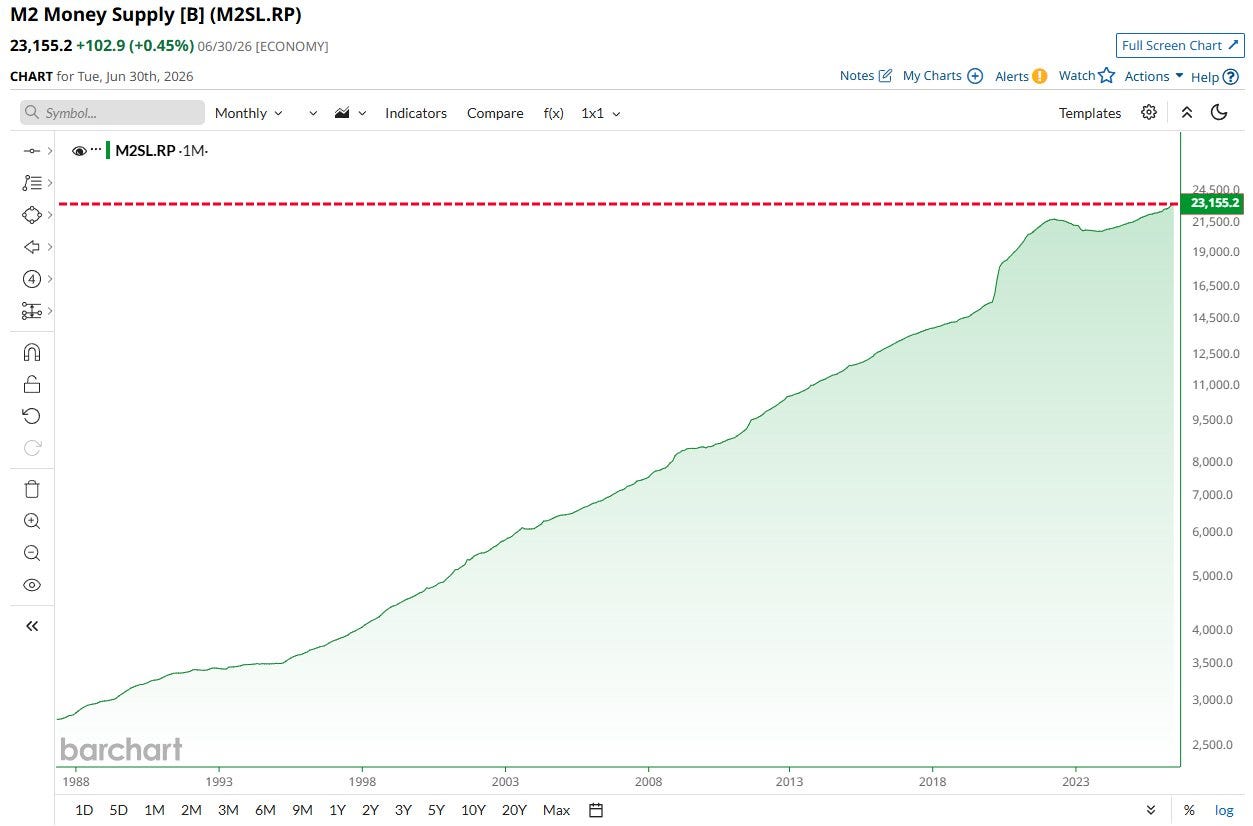
M2 just hit $23.155 trillion. US money supply has grown 279% since 2004 against 171% GDP growth. That gap is the entire reason this asset class exists, and a Fed that hikes into it doesn’t close the gap, it just charges you rent while you wait.
So here’s where we stand;
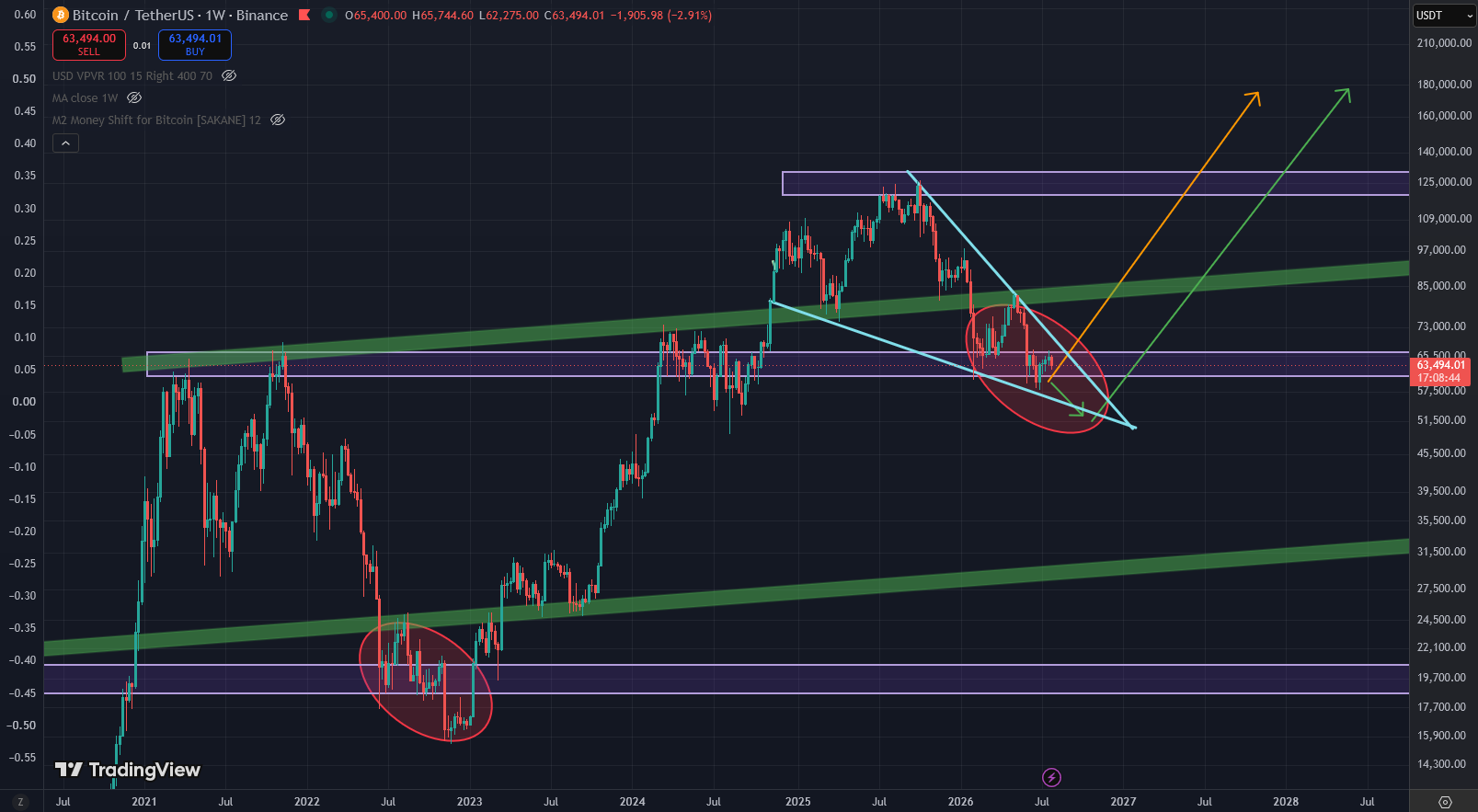
$69,000 is the number. Below it, this is a market being paid to do nothing and doing it well, and the right posture is accumulating into the $62,000 to $68,000 shelf without leverage and without a deadline.
A reclaim of $69,000 on real volume, with the ETF channel buying instead of idling, is when the reset stops being an argument and starts being a chart.
Lose $62,000 with exchange inflows waking up and the clock gets finished the hard way, somewhere lower (54-53K), which is a better entry rather than a broken thesis.
We’re not calling the bottom. We’re saying the people who wait for it to be obvious pay for the privilege, and the cheapest bitcoin in this cycle is being sold right now to people who are bored.
— A.Z., Freedom Finance
*None of this is financial advice. It’s analysis. Do your own research, size your positions to what you can genuinely afford to lose, and don’t make decisions based on price targets from anyone — including us.
Before you go…
This free brief is the what and the where. The Premium edition is the what to do about it, with the levels drawn.
Every Sunday, right after this, I send the full read: where Bitcoin sits and the exact levels that flip it bullish or bearish, what dominance is signaling and whether it’s time to be in alts at all, and one coin worked all the way through — accumulation zone, targets, and the line where the thesis is wrong.
I’m sending the next few editions free so you can see the quality before a dollar changes hands. After that, Premium continues at $4.90 a month, on top of this free Sunday brief.
→ [Get the Premium edition — free this month]
Read it, position around it, and tell me what you want more of.
Supposed Premium edition link goes to a page to buy some ebooks. Where's the what-to-do article? I'd like to have a read before deciding to subscribe....
Cheers.