
There's Probably One More Flush Left in Bitcoin
Wait for it and you'll watch the recovery from the sidelines.

What Happened
Michael Saylor’s Strategy sold Bitcoin. Not the token 32 coins it let go in late May, but 3,588 BTC for around $216 million, disclosed in a Monday SEC filing, with the cash earmarked to cover dividends on the company’s preferred stock. That leaves it holding 843,775 BTC — still the largest corporate stack anywhere — while booking an $8.32 billion loss on those holdings for the second quarter, and it marks the first real selling from a firm whose whole identity was built on never selling. The coins went out at roughly $59,000 to $61,000, days after the company had bought at higher prices.
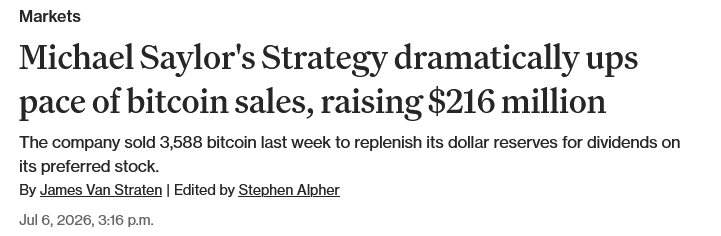
The number underneath it is the one that matters: Strategy’s mNAV, the market’s read on the company versus the Bitcoin it holds, slipped below 1.0. The market is now pricing the entire business at less than its own coins, which switches off the cheap share issuance that funded years of buying and pushes the company toward selling BTC and issuing preferred stock to keep the machine running.
The selling from the regulated side of Bitcoin didn’t stop there. June was the worst month in the history of the US spot Bitcoin ETFs, with roughly $4 billion walking out the door, and the Coinbase premium — a gauge of how hard American buyers are bidding — has now sat negative for its longest stretch since early 2024. Against that, on-chain wallets classed as whales absorbed more than 270,000 BTC, around $16.7 billion, over a two-week window near $59,000, and Glassnode has long-term holders flipping back to net accumulation.
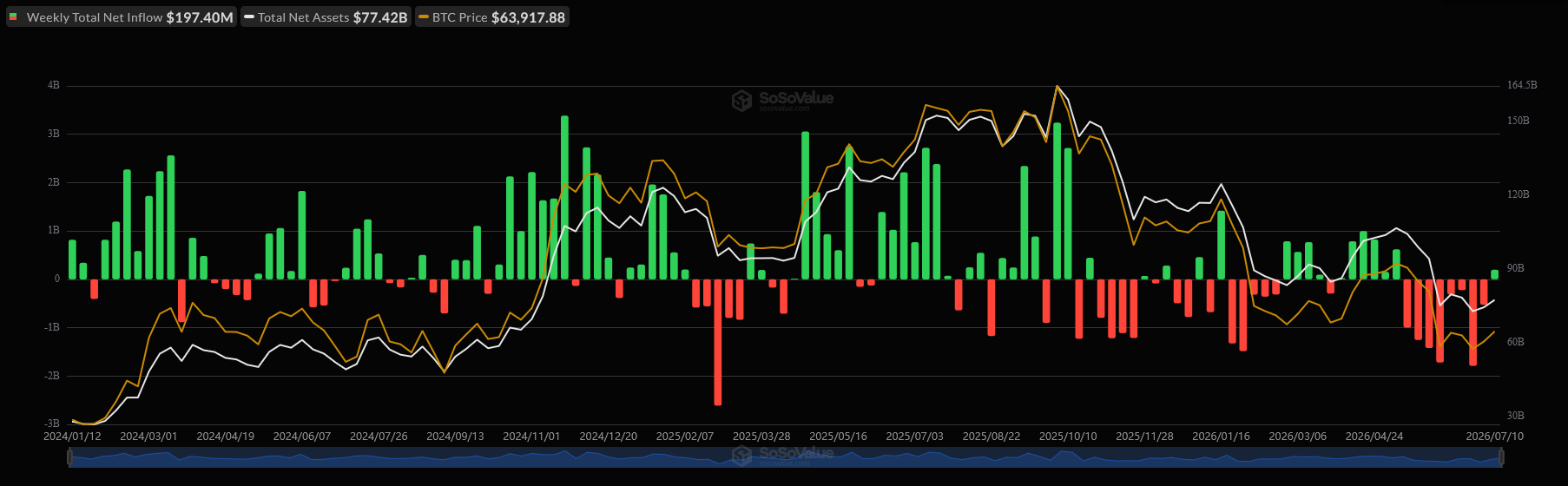
The ETF tape did turn late in the week: US spot Bitcoin funds booked their first positive weekly inflow since mid-May, about $197 million, ending an eight-week losing run, with BlackRock’s IBIT doing most of the lifting and Ether funds adding roughly $84 million. Daily flows stayed choppy, dropping on the days risk sentiment cracked and recovering when it steadied.
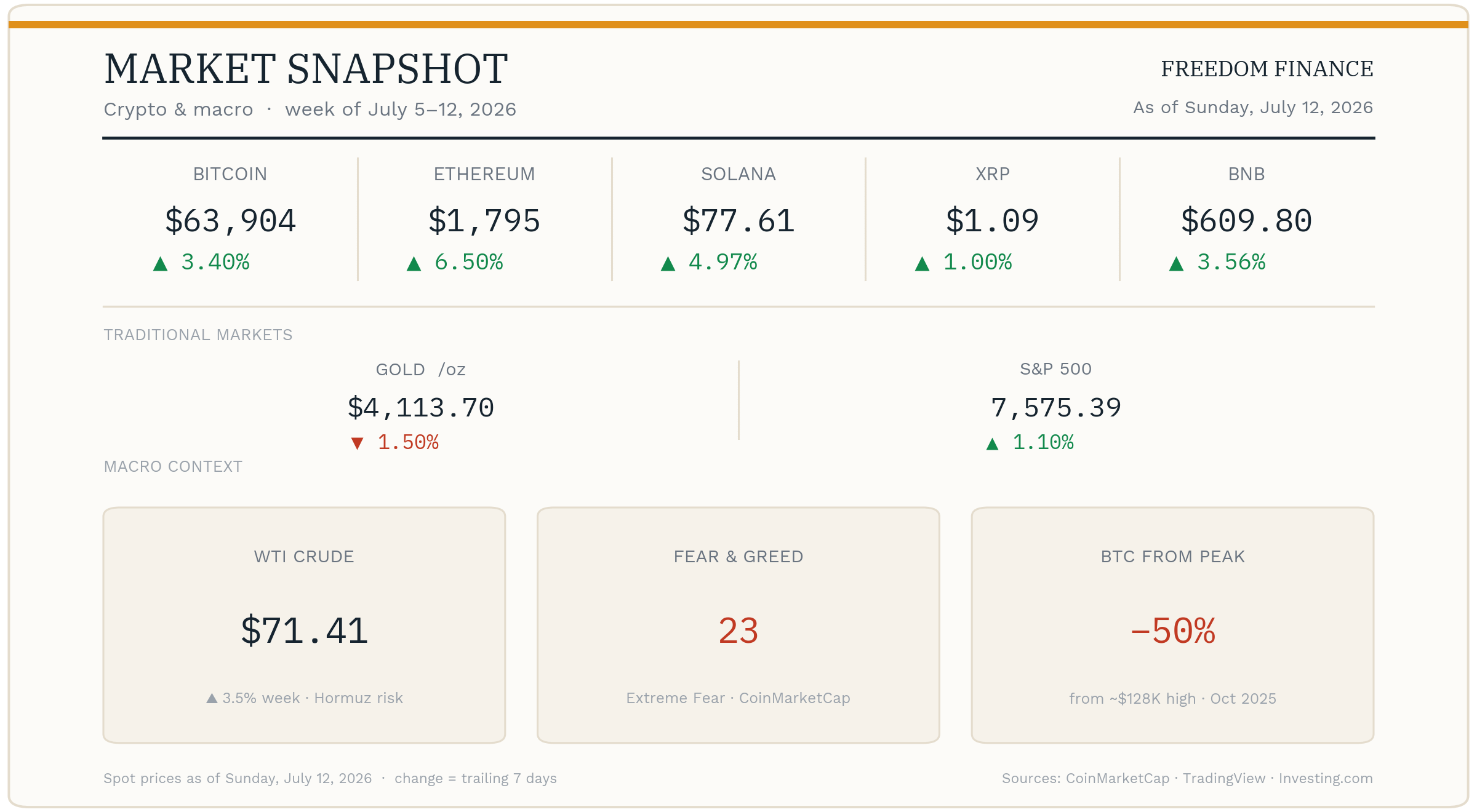
Bitcoin itself clawed back to around $64,000, off June’s 21-month low near $58,000, though the Fear & Greed Index is still parked at 23, deep in extreme fear.
Ether traded near $1,750 and remains the only major up on the year.
Solana led the majors on the week around $79, XRP sat near $1.10, and BNB held around $610.
Bitcoin dominance stayed in the high 50s after a brief dip toward the mid-50s during the altcoin bounce.
The macro backdrop did most of the pushing and pulling.
US forces struck around 90 Iranian military sites near the Strait of Hormuz on July 7, oil spiked past $80, and Bitcoin sold off with risk assets before crude gave the move back on reopening progress — then Iran’s military declared the strait closed again.
Over it all sits the Fed. New chair Kevin Warsh held rates at 3.50–3.75% at his first meeting, stripped the cutting bias out of the statement, and nine of eighteen officials now pencil in at least one hike this year.
The June CPI print lands July 14, the FOMC meets July 28–29 with a hike now a live option, and markets are pricing real odds of tightening rather than the cuts they expected a few months ago.
On the policy side,
the CLARITY Act missed its original deadline, with the Senate — back in session July 13 — now targeting a final draft around August 7 and roughly coin-flip odds of passing this year.
Ripple secured a full MiCA license in the EU, and South Korea moved to fold digital assets into its civil enforcement rules.
Elsewhere, a governance attack drained about $20 million from BonkDAO, and the crypto listings that came public in the last year kept sliding, with Gemini down 89% from its debut, BitGo off 77%, and Bullish down 71%.
Where Are We
If you only watched the headlines, you’d think Bitcoin should be sitting a long way below where it is.
The man who was supposed to buy forever started selling.
A war in the Middle East flared back up.
Extreme fear on every sentiment gauge.
And Bitcoin spent the week refusing to break, holding well above the $59,000 zone it first carved out back in February.
That gap between how bad the news felt and how well the price held is the most useful thing that happened, because it tells you the news was never the thing driving this market in the first place.
News amplifies moves. It doesn’t create them. What actually moves crypto over any stretch longer than a bad afternoon is liquidity — where the free money in the world is going, and whether it’s flowing toward risk or getting pulled back.
The Saylor sale scared people, and we understand why. He built a religion around one idea, and the idea just cracked. But strip the story away and look at what the sale actually was: a company whose mNAV fell under 1.0 doing the only thing a company in that spot can do. When the market values you at less than the coins on your balance sheet, you can’t print shares to buy more without torching your own holders, so you sell a sliver of the stack to pay the bills. It’s a balance-sheet problem dressed up as a betrayal. A year from now nobody is going to be talking about it.
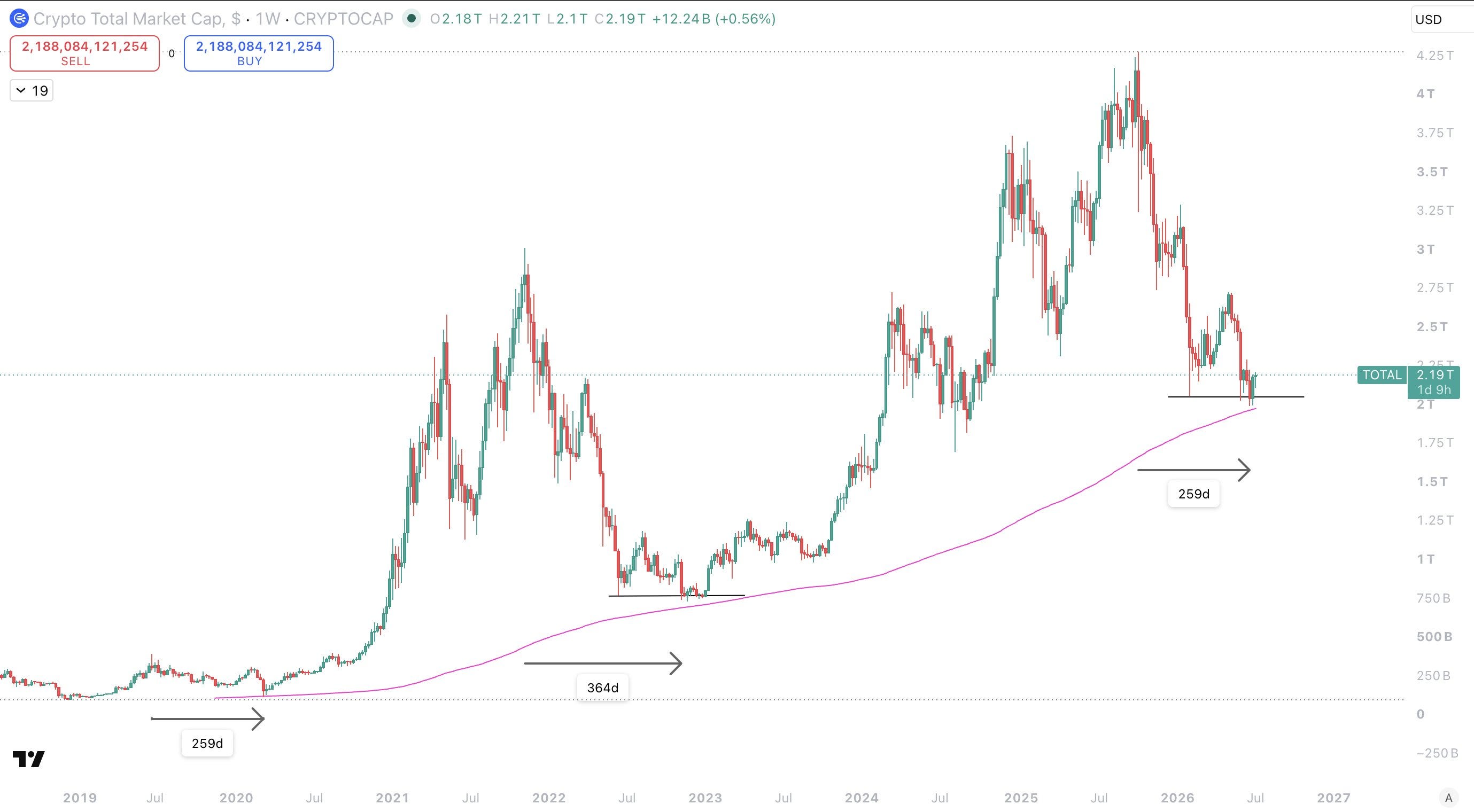
Here’s what’s holding the floor while the loud money runs. Look at the total crypto market cap on the weekly and it’s sitting right on its 1-week 300 SMA — the same deep, oversold level that marked the 2020 COVID low and the 2022 bear bottom, and it’s actually stretched a touch further than 2022 did. Bitcoin has never closed a week below its 300-week average. Not once.
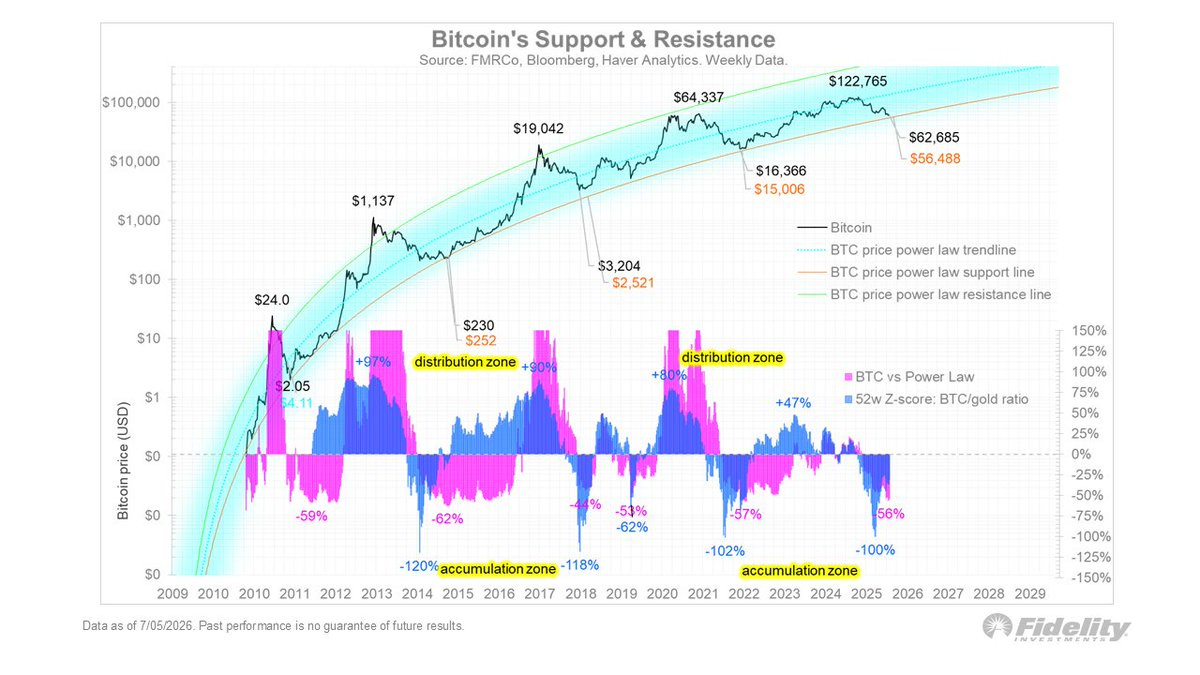
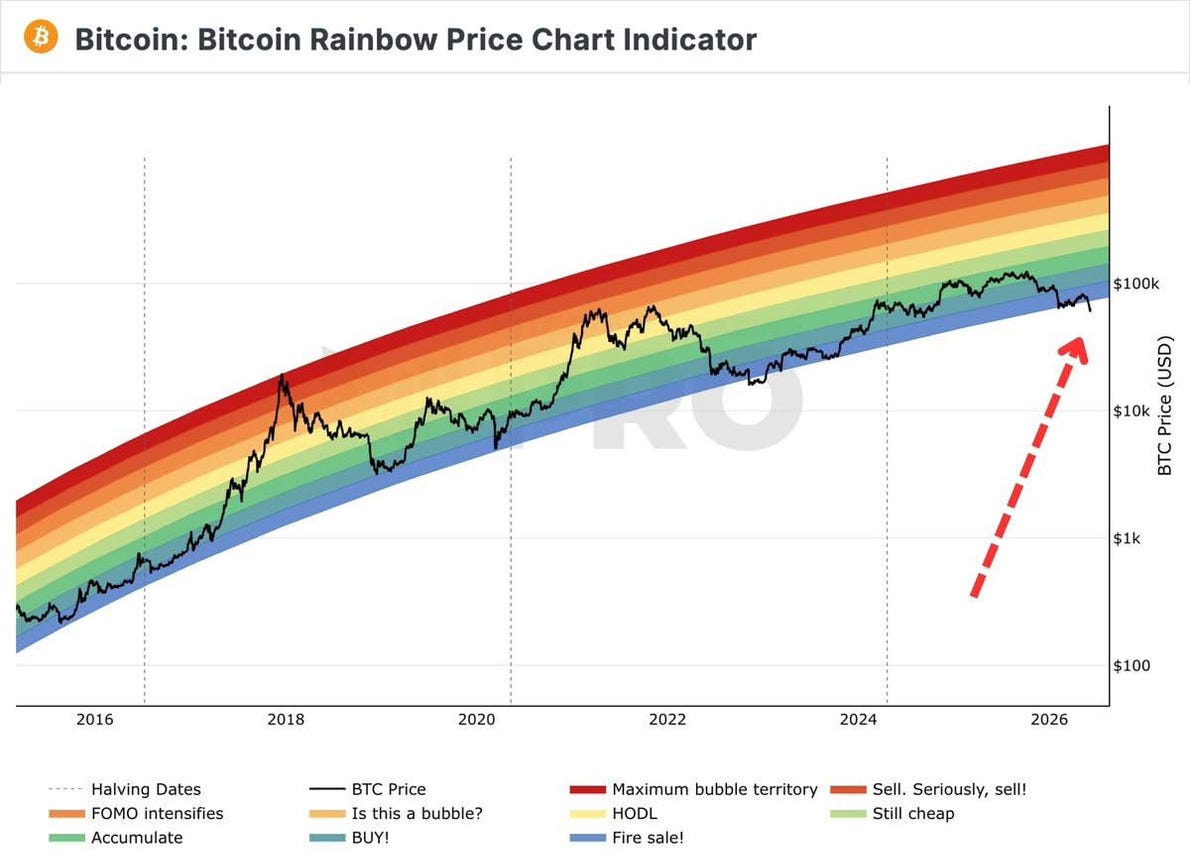
Pull up the power law support that’s caught every bottom since 2015, and price is right on it, with the premium fully compressed and the tourists long gone. The rainbow has Bitcoin down in the bands it only visits when it’s cheap. And while the ETFs bled a record month, whales took 270,000 coins off the market near $59,000. That’s the real divergence: the allocators who answer to a quarterly performance review trimmed Bitcoin the way they’d trim any tech stock when inflation runs hot, while the holders who answer to nobody sat there and bought. Those two groups are trading completely different clocks, and the patient one is the one setting the floor.
So the question that decides the next few months isn’t what Saylor does. It’s what the dollar does. The liquidity that washes into crypto doesn’t come from the global money supply everyone quotes — that model broke last summer. It comes out of Japan. Three decades of near-zero rates in Japan turned the yen into the world’s funding currency, and that cheap borrowed money has been propping up stocks, property and crypto for years. When Japan tightens, that money gets yanked home to pay down loans, and everything built on it wobbles — that’s the carry trade you hear about every time crypto suddenly pukes for no visible reason.
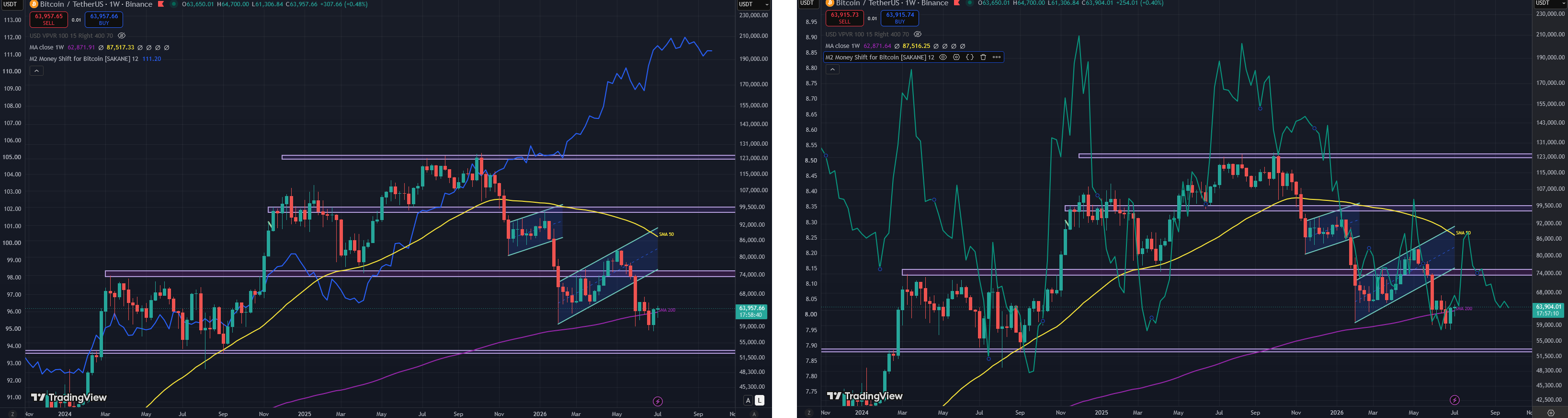
And what controls how loose Japan can be? The dollar. A strong dollar boxes them in; a weak one lets them ease. Whatever the dollar is doing today shows up in that liquidity today, and shows up in Bitcoin roughly three months later.
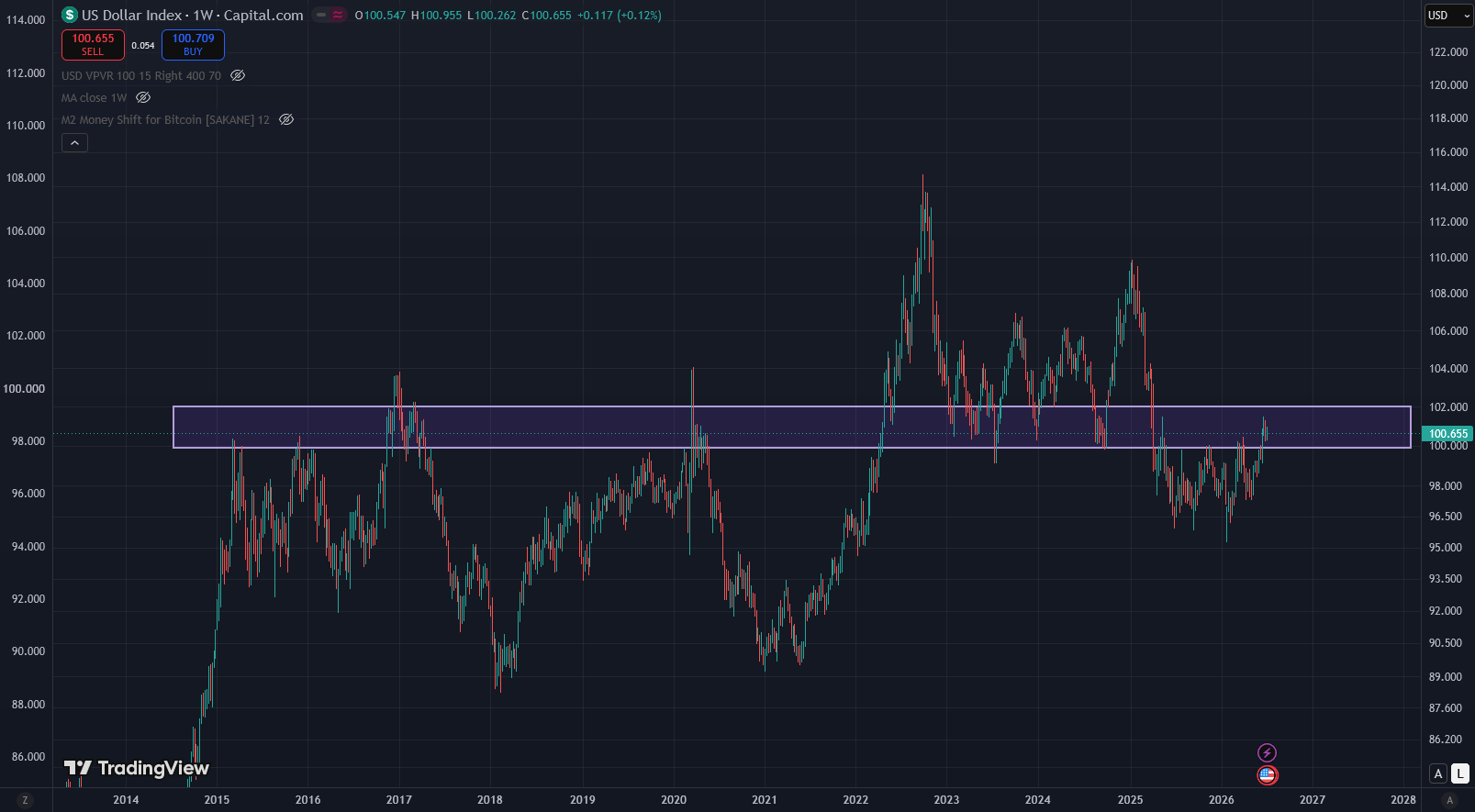
Now look at the dollar. The DXY is pressed right up against an area that used to be support and is now resistance, around the 100–101 zone, the same wall that’s rejected it before. If it fails there — and with the Fed edging away from hikes and CPI cooling as the oil scare fades, there’s a real case it does — that’s the fuel line for crypto reopening. It won’t feel like much when it happens. It rarely does. But it’s the mechanism nobody watching Saylor is paying attention to.
The Fed is the other half of it, and we don’t think Warsh wants to hike. He’s said out loud he sees AI as a productivity boom that turns disinflationary once it gets going, and the last thing a chair brought in by this administration wants is to run a tight hiking cycle into the midterms. The July 29 meeting carries maybe 35–40% odds of a hike. If they hold, Bitcoin has room to push back toward $70,000 as the market starts pricing that the tightening it feared isn’t coming. If they do go, it’ll almost certainly be a one-and-done credibility move — a dovish hike where he signals they can now sit back — and the long end comes down, which markets take as a positive against expectations. Either outcome drains the fear that’s been sitting on the tape. A government running a deficit this size can’t actually tighten hard anyway.
We’re pro crypto here, but we’re not going to insult you by pretending the downside is gone.
This market is tracking 2018 and 2019 almost uncomfortably closely — the February low, the higher low in spring, the run to the 200-day moving average in May, the sweep of the earlier low in early July that put in $57,000, right where the fractal said it would. In both of those years there was one more flush after this point, usually on the back of a 10–20% stock-market wobble in the autumn, before the real bottom went in. The on-chain map says the same: realized price sits near $53,000, and Bitcoin has dipped under it in most midterm years, so a wick into the high-$40s or low-$50s would simply check a box that’s normally checked. The line where being bearish stops making any sense at all is the balance price, a little under $40,000 — every prior cycle bottom has printed below it, though each cycle tags it less deeply than the last, and this may be the one that doesn’t reach it. Call it 40 to 45% odds the bottom is already in. Not a sure thing.
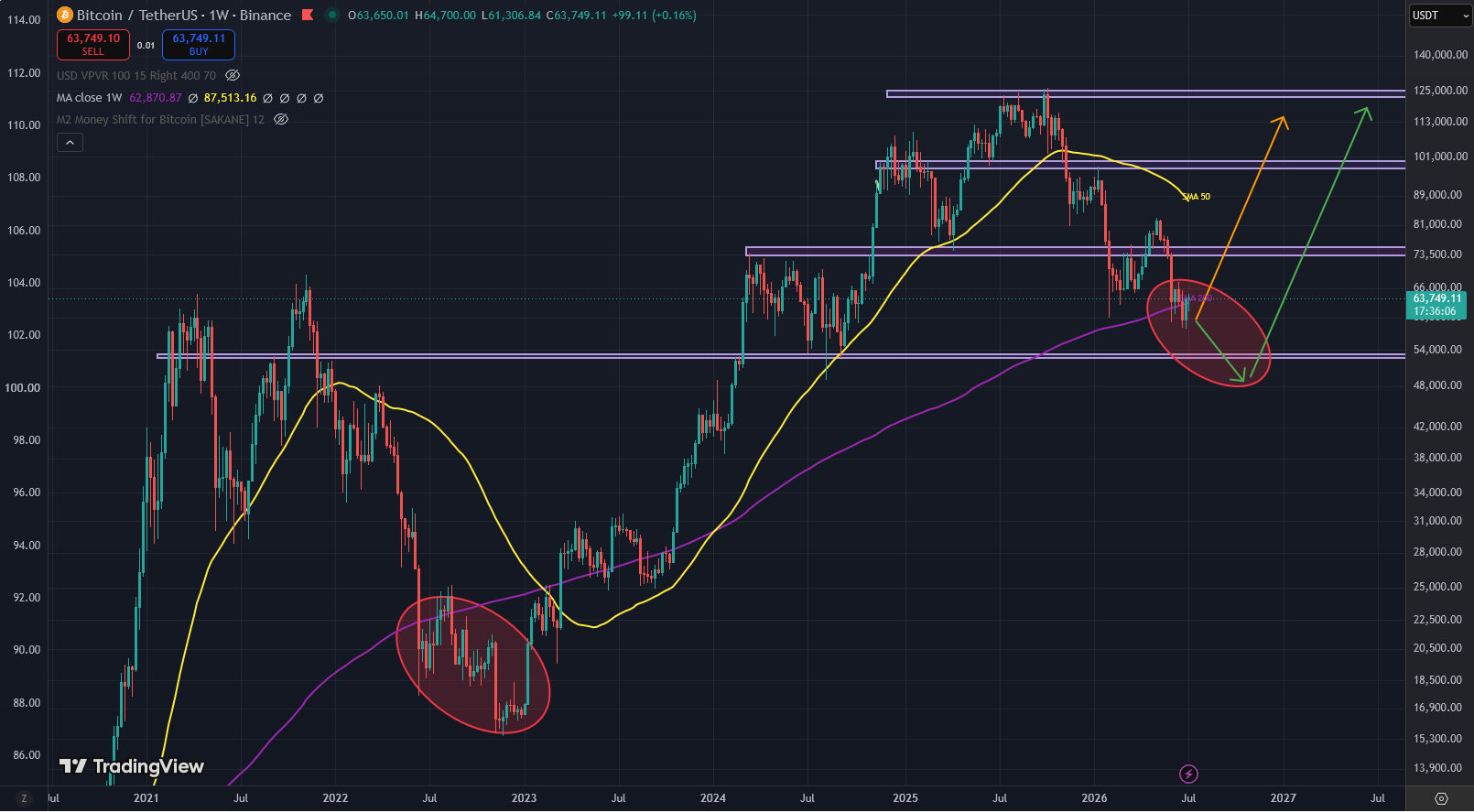
But here’s the part people get wrong when they hear that. Being right about a final flush and actually making money are two completely different games. The trap is calling the bottom perfectly, sitting in cash waiting for it, and then never flipping bullish when it arrives — congratulations, you were right and you made nothing. Anything under $60,000 is a level long-term holders will look back on as a gift, and you don’t need to nail the exact wick to take it. If that stock-driven scare comes and drags crypto down one more time, that’s not the thing to be afraid of. That’s the entry.
Zoom out and the reason this whole space got starved is simple: the money went to AI.
Bitcoin spent the last stretch acting as the funding short of the AI trade — anything built on code got lumped in with the semis, and when momentum unwound, crypto got sold to hedge it. That capital suck is what drained the room, and it’s the thing that’s now ending as the AI build-out cools off its overheated leg. What comes next is bigger than a bounce. The administration has been open that digital assets, stablecoins and tokenization are part of how it intends to keep control of the financial system’s plumbing, and as agentic commerce arrives, money starts moving faster and dormant assets like real estate get pulled on-chain. That’s a multi-year setup, and it runs straight through Bitcoin as the collateral layer underneath it.
Altcoins are the one place to keep your expectations honest. They need two things at once to run — Bitcoin strong, and real liquidity in the wider economy, the kind you can read off the copper-to-gold ratio and an expanding Fed balance sheet. Right now you’ve got neither fully in place, which is exactly why altseason keeps getting called and keeps not showing up. When the dollar rolls over and pushes liquidity back into Bitcoin, and the balance sheet starts expanding into it, both catalysts line up and the alts finally get their turn. Until both are on, chasing them is early.
So:
the total market has bottomed on the levels that have never once failed,
the whales already voted with $16.7 billion,
and the only thing standing between here and the turn is the dollar finishing its rejection and the Fed getting out of its own way.
There may be one more scare left in this — a stock wobble, a hot print, another Saylor headline that means nothing. If it comes, we’re buyers into it, not sellers out of it. Satoshi picked a Japanese name. Maybe he knew where the liquidity would come from all along.
— A.Z., Freedom Finance
*None of this is financial advice. It’s analysis. Do your own research, size your positions to what you can genuinely afford to lose, and don’t make decisions based on price targets from anyone — including us.
Before you go…
This free brief is the what and the where. The Premium edition is the what to do about it, with the levels drawn.
Every Sunday, right after this, I send the full read: where Bitcoin sits and the exact levels that flip it bullish or bearish, what dominance is signaling and whether it’s time to be in alts at all, and one coin worked all the way through — accumulation zone, targets, and the line where the thesis is wrong.
This week: the $58K line under Bitcoin and the ceiling that matters, why 59% dominance decides whether alts even move, and Solana mapped from here to $400.
I’m sending the next few editions free so you can see the quality before a dollar changes hands. After that, Premium continues at $4.90 a month, on top of this free Sunday brief.
→ [Get the Premium edition — free this month]
Read it, position around it, and tell me what you want more of.